
Twin Suns detailed information
- Arundo

- May 28
- 5 min read
What is Twin Suns?
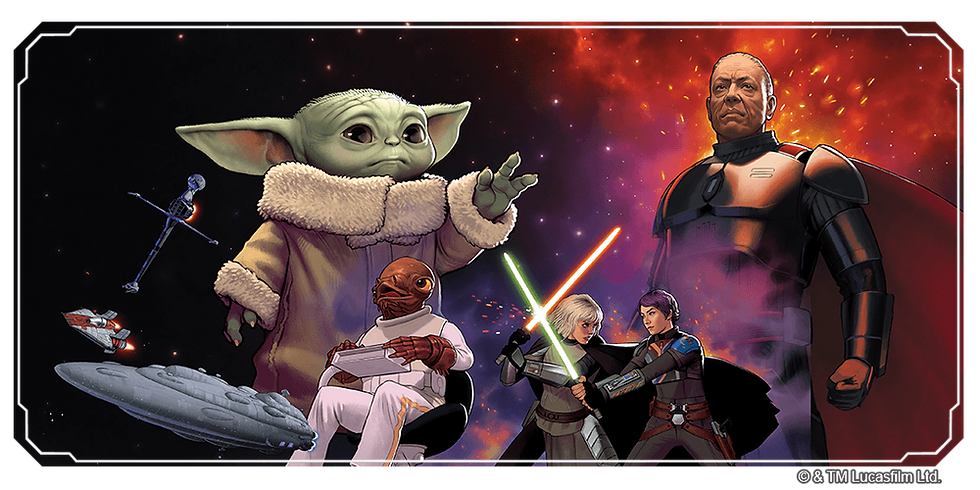
Twin Suns is a multiplayer format for Star Wars: Unlimited, designed specifically for 3–4 players. Unlike the standard competitive 1v1 format (Premier), Twin Suns focuses on social interaction, shifting alliances, and table politics, while still keeping the core tactical gameplay intact.
It is not just “more players playing at once”—it’s a redesigned experience where:
Threats are shared across multiple opponents
Timing matters more than pure efficiency
The strongest player becomes a temporary “table enemy”
Game momentum constantly shifts between players
Twin Suns is essentially the game’s chaotic multiplayer variant, where winning requires reading the table as much as reading your opponent.
Core Structure of the Game
Player Count and Setup
Designed for 3–4 players
Each player brings:
1 base
2 leaders
A singleton deck (no duplicates outside basic rules)
Play proceeds in clockwise turn order
Despite being multiplayer, gameplay still follows the familiar Star Wars: Unlimited structure:
Action phase alternates between players
Resources and combat remain central mechanics
Bases are still the primary win condition
Major Rule Differences from Premier
Twin Suns keeps the core rules but introduces several important mechanical changes that reshape gameplay.
1. The Three Counters System
Instead of only having Initiative, Twin Suns introduces a shared counter pool:
Initiative Counter
Works like standard play
Grants tempo advantage and priority in actions
Blast Counter
Deals 1 damage to every opponent’s base
Functions as a global pressure tool
Encourages aggression or punishes slow setups
Plan Counter
Draw 1 card
Then place 1 card from your hand on the bottom of your deck
Acts as both card advantage and deck filtering
Key Rule: One Counter per Round
Once a counter is taken, it is gone for that round
Players must choose carefully because:
Taking Initiative denies tempo
Taking Blast pressures the entire table
Taking Plan stabilizes long-term strategy
This system creates constant tension because every counter affects all players, not just one opponent.
2. “Take a Counter, Pass Turn” Structure
When a player takes any counter:
They immediately end their opportunity to act for that action phase
They effectively “pass” until the next round
This introduces a strong layer of decision-making:
Do you act now to build board state?
Or do you secure a counter before someone else does?
In multiplayer, timing is everything—waiting too long often means losing access to the best counter for your strategy.
3. Mandatory Action Rule
Unlike some casual multiplayer systems where players can stall or pass repeatedly, Twin Suns requires activity:
On your turn:
You must take a game-changing action
You cannot pass unless you have no legal actions available
This rule prevents stalling and ensures:
Constant board interaction
Faster game pacing
Reduced downtime in multiplayer sessions
Eventually, players are forced into:
Playing units
Using abilities
Engaging in combat
Or taking a counter
4. Multiplayer Combat Dynamics
Combat in Twin Suns is significantly more complex than 1v1 play.
You Are Not Fighting One Opponent
Instead, you must evaluate:
Who has the strongest board?
Who is closest to winning?
Who is weakest and can be ignored temporarily?
Attack Incentives
Attacking one player may expose you to retaliation from another
Leaving a strong player unchecked can allow them to snowball
Removing threats often benefits the entire table—sometimes not equally
This creates a risk-reward triangle instead of a simple duel.
Deckbuilding in Twin Suns
Deck construction is one of the most defining parts of the format.
Core Rules
1 base
2 leaders
Singleton deck (only 1 copy of each non-leader card)
Leaders must share Heroism or Villainy identity
Minimum deck size is typically 80+ cards
What This Changes Strategically
1. No Consistency Through Duplicates
Unlike Premier, you cannot rely on:
Multiple copies of the same removal
Repeated win-condition cards
Highly consistent curves
Instead, you must:
Use flexible cards
Prioritize adaptable effects
Build redundancy through variety, not copies
2. Two-Leader Synergy System
Your leaders define your strategy twice over:
Leader 1: early-game pressure or tempo
Leader 2: late-game scaling or control
Because both leaders can enter play separately, decks often revolve around:
One aggressive leader + one stabilizer
One control leader + one finisher
One value leader + one tempo disruptor
3. Higher Card Pool Importance
Singleton rules make every card more meaningful:
Each draw matters more
Sequencing is less predictable
Tech choices have higher impact
Leader Mechanics in Multiplayer
Each player brings two leaders, and both can be deployed independently.
Key implications:
You effectively have two “hero units” over the course of the game
Each leader’s Epic Action becomes a major swing tool
Timing your leader deployment is often game-defining
Advanced concept: Leader sequencing
Good Twin Suns players think about:
Which leader creates early pressure?
Which leader stabilizes against multiple opponents?
Which leader draws attention away from your weaker board state?
The Flow of a Typical Game
Twin Suns games tend to follow a loose rhythm:
1. Early Game (Setup Phase)
Players establish resources and early units
Minimal aggression
Focus on positioning and card advantage
2. Mid Game (Conflict Phase)
Boards develop heavily
First leaders appear
Combat becomes frequent
Players begin targeting leaders and key engines
3. Late Game (Collapse Phase)
Bases are pressured heavily
Blast counters become more impactful
Eliminations begin occurring
Remaining players pivot toward survival and finishing blows
Elimination and Endgame Rules
Unlike standard elimination formats, Twin Suns continues after players are defeated.
When a base reaches 0 HP:
That player is eliminated
The player who dealt the finishing blow:
Heals 5 damage from their base
The game does not immediately end
Game End Condition:
The game continues until the end of the current phase
Then the winner is determined by:
Highest remaining base health
Why this matters
This system prevents:
“Kingmaking” from instant elimination wins
Sudden game endings from one big attack
Early eliminations from removing player agency too quickly
Instead, it ensures:
A final “score check” moment
Multiple players still competing after eliminations
Strategy and Politics
Twin Suns is as much about psychology as mechanics.
1. Table Politics
Players naturally form:
Temporary alliances against the leader
Short-term truces to survive aggression
Opportunistic strikes when others are weakened
2. Threat Assessment
A key skill is identifying:
Who is actually winning?
Who looks dangerous but isn’t?
Who benefits most from current board state?
3. Counter Timing
Choosing counters is often more important than playing cards:
Initiative = control tempo
Blast = punish greed or wide boards
Plan = stabilize and dig for answers
Common Mistakes New Players Make
Taking Blast too early with no board follow-up
Overcommitting to one opponent while ignoring others
Playing Twin Suns like a 1v1 duel
Ignoring the value of card selection from Plan
Mismanaging leader deployment timing
Why Twin Suns Feels Unique
Twin Suns stands out because it blends:
Traditional tactical card play
Multiplayer chaos and negotiation
Long-form strategic planning
Sudden shifts in game momentum
No two games feel the same because:
Player alliances constantly change
Counter choices reshape entire rounds
Leaders create unpredictable power spikes
Final Thoughts
Twin Suns transforms Star Wars: Unlimited into something much closer to a tabletop strategy experience than a strict duel card game.
It rewards:
Flexibility over optimization
Awareness over aggression
Timing over repetition
Politics over pure math
If Premier is about precision, Twin Suns is about reading the table and surviving the chaos long enough to control the endgame.


Comments