
Ashes of the Empire spoilers
- Arundo

- Apr 18
- 4 min read
A Glimpse Into the Next Era
There’s a lot building in our upcoming era-focused set, Ashes of the Empire, and while I can’t reveal everything just yet, I can share a few early insights that hint at what’s coming. Think of this as a preview of themes, mechanical directions, and a few intriguing oddities that should spark discussion among players.
This set is shaping up to be one of the most identity-driven releases we’ve done so far, and even though much of it is still under wraps, the pieces we can show already point toward a very distinct design space.

Thematic Direction: The Empire’s Fall
At its core, this set explores the collapse of the Galactic Empire and the unstable era that follows. The aftermath of Endor looms large, shaping both the factions and the conflicts represented in the card pool.
As you might expect:
Imperial-aligned cards feature heavily
The tone reflects transition, instability, and rebuilding
Many characters and factions are reacting to a shifting galaxy rather than controlling it
This is not a story of dominance—it’s a story of consequences.
Mechanical Identity: The Upgrade Era
Mechanically, the set leans strongly into upgrades as a central theme. More than in previous sets, upgrades are not just enhancements—they are a core strategic engine.
In practice, this means:
A higher-than-usual number of upgrade cards
More interactions that care about attached upgrades
New ways to leverage upgrades beyond simple stat boosts
The design encourages players to think of upgrades as long-term investments rather than temporary buffs, creating more layered decision-making during deck construction and gameplay.
Notable Stat Line Oddities
While we can’t show full cards yet, we can highlight some unusual stat configurations appearing in the set. These stand out because they break from typical expectations and hint at new design space:
A leader unit with 0 power and 3 health
A 1-cost unit with 3/3 stats
A massive space unit with 15/15 stats
A 6-cost common unit with 8 power and 4 health
A 1/4 unit that also has Overwhelm
These kinds of designs suggest a set that is willing to push boundaries in both efficiency and role definition, creating unexpected tradeoffs and evaluation challenges.

Faction Emphasis and Card Distribution
The set also places noticeable emphasis on specific factions and eras within the Star Wars timeline.
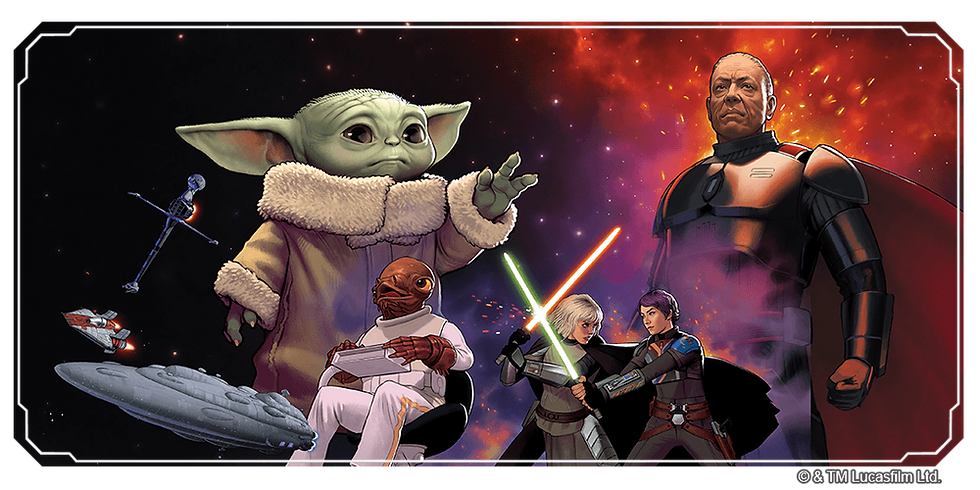
New Republic representation is higher than in any previous set so far
Mandalorian units also appear in greater numbers than usual
The card pool draws from multiple eras, including:
Return of the Jedi
The Mandalorian
Book of Boba Fett
Ahsoka
In addition, there is continued support for Clone Wars and Rebels-era content, with a smaller but meaningful presence
This blend creates a cross-era environment where familiar characters interact in new mechanical contexts.
Cycles and Returning Ideas
Some design threads continue across sets, with existing cycles carrying forward into this release. This helps maintain continuity while allowing new mechanics to evolve naturally.
There are also multiple nods to previously established leader interactions, including:
Leaders that care about defeat triggers
Expanded Force-related synergies
New ways to trigger existing leader abilities in fresh contexts
Rather than reinventing everything, the set builds on established patterns and expands them into new territory.

Upgrade Legends and Design Focus
A highlight of the set includes a cycle of legendary upgrades, each designed to feel powerful, unique, and highly impactful.
These cards emphasize:
Long-term board presence
High-impact attachment effects
Strategic identity shifts depending on who uses them
The goal is to make upgrades feel like defining pieces of a strategy rather than supplemental tools.
Shield Tokens and Battlefield Durability
With increased armor and upgraded units in play, Shield tokens appear more frequently than in any previous set.
This shift creates:
More resilient boards
Extended combat sequences
Increased value for multi-step removal planning
The battlefield becomes less about quick exchanges and more about layered attrition and timing.

Design Intent: Subtle Cross-Set Planning
During development, several leaders from earlier releases were kept in mind. This ensures that newer cards don’t exist in isolation but instead interact with the evolving ecosystem of the game.
Examples of this approach include:
Additional support for leaders that care about being defeated
Expanded Force-related strategies for certain characters
New triggers that reinforce older deck archetypes
This creates a living card pool where older strategies continue to gain relevance.
Hidden Clues and Flavor Subtitles
The set also includes a variety of evocative subtitle names that hint at story moments, character motivations, and thematic direction.
While many are straightforward, others are deliberately ambiguous, encouraging players to speculate about which characters or scenes they belong to.
These subtitles serve as narrative breadcrumbs—small hints that build anticipation without revealing full context.
Card Design Teasers
A number of partial card ability descriptions have also been revealed, though not their full context. These fragments hint at new mechanics, unusual effects, and experimental design space.
They include ideas such as:
Searching multiple cards from a deck
Preventing large bursts of base damage
Copying abilities from discarded units during an attack
Converting resources into direct base damage
Allowing attacks across both arenas
Manipulating token abilities and restrictions
Temporary rule-breaking effects tied to timing windows
Cost and aspect interactions that change dynamically
Individually, these hints are incomplete—but together they suggest a set focused on flexibility, interaction, and layered decision-making.

Final Thoughts
While much of Ashes of the Empire remains hidden, the early signals point toward a set built around:
Upgrade-heavy gameplay
Strong faction identity
Experimental stat lines
Expanded token interaction
Deep synergy with previous sets
It’s a set designed to reward players who enjoy adapting to shifting board states and discovering how new mechanics interact with existing systems in unexpected ways.
More details will be revealed as preview season continues—but for now, these fragments should be enough to start imagining what’s coming next in Star Wars: Unlimited.


Comments